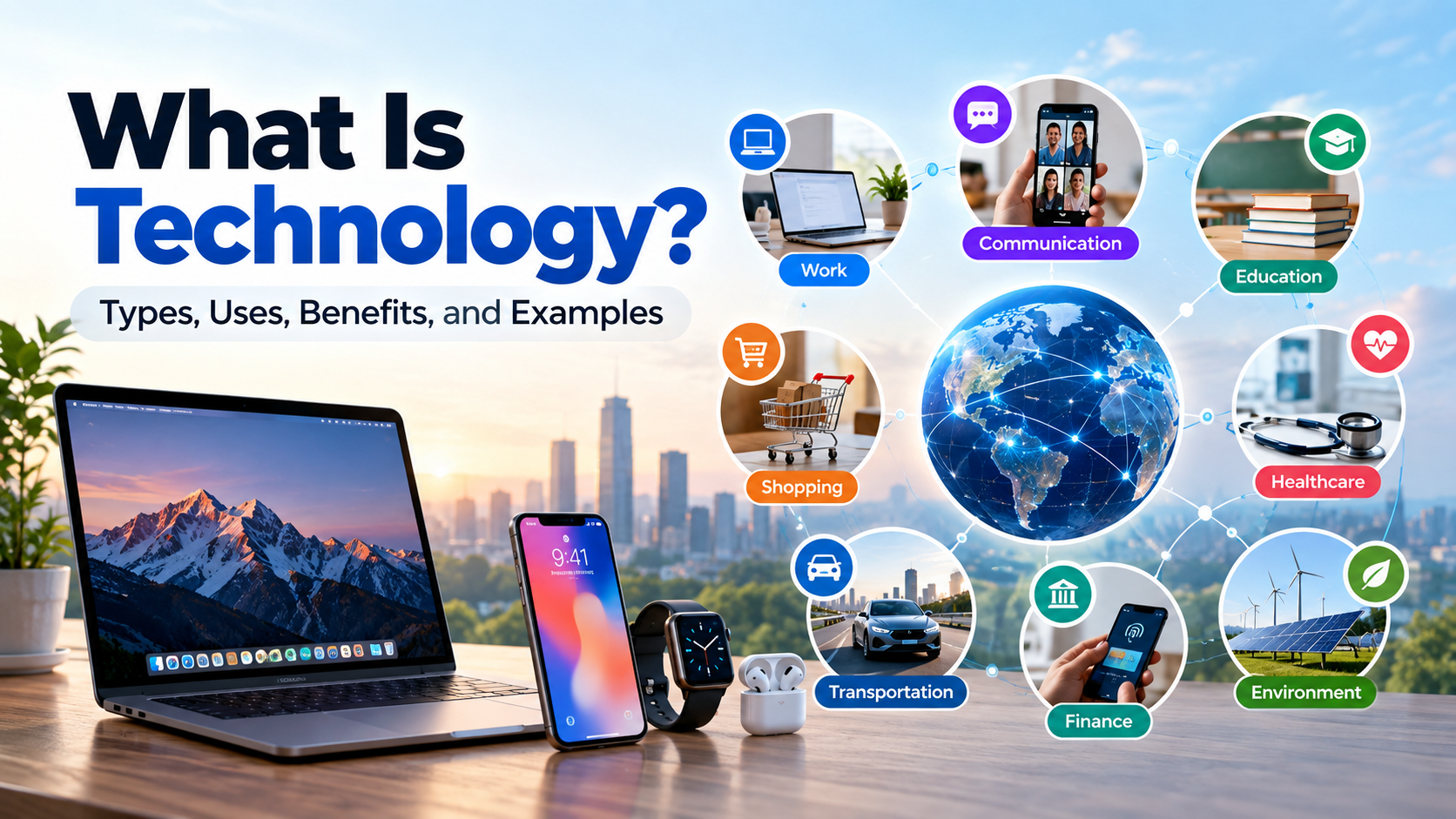
You use technology when you check your phone, send a message, search Google, watch a video, make an online payment, or use a computer for work. Businesses also depend on technology to communicate with customers, manage information, sell products, and complete daily tasks.
If you are just getting started, technology can seem like a huge and complicated subject. The good news is that you do not need to be an expert to understand it.
In simple terms, technology is the collection of tools, machines, systems, and methods people create and use to solve problems and make tasks easier.
This guide explains what technology is, the main types of technology, how it is used, its benefits, and real-world examples.
What Is Technology?
Technology is the practical use of knowledge, tools, and methods to solve problems or complete tasks.
A smartphone is technology. A computer is technology. A car, television, washing machine, GPS system, and solar panel are also examples of technology.
Technology does not always have to be electronic or digital.
For example, a simple hand tool can be considered technology because it was designed to help people perform a task more effectively.
Modern technology, however, often refers to digital and electronic systems such as computers, smartphones, the internet, software, cloud services, and connected devices.
A Simple Example of Technology
Think about how people communicated hundreds of years ago.
Sending information over a long distance could take days, weeks, or even months.
Today, you can send a message to someone on another continent almost instantly using a smartphone and the internet.
That is one of the clearest examples of how technology can change the way people live and communicate.
How Does Technology Work?
Technology works by combining knowledge, tools, materials, and processes to accomplish a particular goal.
For example, a smartphone combines several technologies:
- A processor handles calculations.
- A screen displays information.
- Cameras capture photos and videos.
- Wireless connections send and receive data.
- Software allows you to use applications.
- A battery provides power.
- Sensors detect movement, location, and other information.
Each part has a specific function, but they work together as one device.
The same idea applies to larger systems such as computers, internet networks, vehicles, factories, and business software.
Types of Technology
There are many different types of technology. Each serves a different purpose.
Here are some of the most important types you should know.
1. Information Technology
Information technology, commonly called IT, involves computers, software, networks, databases, and other systems used to create, store, process, and manage information.
Examples include:
- Desktop computers
- Laptops
- Servers
- Databases
- Business software
- Computer networks
- Cybersecurity tools
Businesses rely heavily on IT to manage their operations and information.
For example, an online store may use computers and software to manage products, customer orders, payments, and inventory.
2. Communication Technology
Communication technology helps people exchange information.
Examples include:
- Smartphones
- Video calls
- Messaging apps
- Social media
- Wireless networks
- Internet services
Communication technology has made it much easier to stay connected regardless of distance.
You can now have a video meeting with someone thousands of kilometers away without leaving your home.
3. Internet Technology
The internet connects computers, phones, servers, and other devices around the world.
It allows people to:
- Search for information
- Visit websites
- Send emails
- Watch videos
- Shop online
- Use online banking
- Download software
- Communicate with others
The internet is also one of the most important tools for modern businesses.
A small business can create a website and reach potential customers in different countries without opening physical stores in those locations.
4. Computer Technology
Computer technology includes the hardware and software used to process and manage information.
Computer hardware includes physical components such as:
- Processors
- Memory
- Hard drives
- Monitors
- Keyboards
- Graphics cards
Software includes programs and operating systems that tell the computer what to do.
Computers are used in schools, offices, businesses, hospitals, banks, factories, and homes.
5. Mobile Technology
Mobile technology allows people to access digital services while moving from one location to another.
Smartphones and tablets are the most common examples.
Mobile technology allows you to:
- Make calls
- Send messages
- Browse the internet
- Take photos
- Use maps
- Shop online
- Make payments
- Watch videos
- Use business applications
Because smartphones are widely used, businesses increasingly design their websites and services for mobile users.
6. Medical Technology
Medical technology refers to tools and systems used to prevent, diagnose, monitor, and treat health problems.
Examples include:
- Medical imaging equipment
- Patient monitoring devices
- Surgical equipment
- Laboratory equipment
- Digital health records
- Wearable monitoring devices
Medical technology helps healthcare professionals collect information and provide services more efficiently.
7. Transportation Technology
Transportation technology helps people and goods move from one place to another.
Examples include:
- Cars
- Trains
- Aircraft
- Ships
- GPS navigation
- Traffic management systems
- Electric vehicles
Modern transportation depends on many different technologies working together.
GPS, for example, can help drivers determine their location and choose a route to their destination.
8. Financial Technology
Financial technology, often called fintech, uses technology to provide financial services.
Examples include:
- Mobile banking
- Online banking
- Digital payments
- Digital wallets
- Payment platforms
- Investment applications
Financial technology has made it possible to perform many financial tasks without visiting a physical bank.
For businesses, digital payment systems can also make it easier to accept payments from customers.
9. Agricultural Technology
Technology is also changing agriculture.
Farmers can use technology to improve productivity, monitor crops, manage water, and collect useful information.
Examples include:
- Irrigation systems
- Tractors
- Weather monitoring tools
- Farm management software
- Soil sensors
- Drones
- Automated equipment
The right technology can help farmers use resources more efficiently and make better decisions.
10. Green Technology
Green technology focuses on solutions that can reduce environmental impact and improve the use of natural resources.
Examples include:
- Solar panels
- Wind turbines
- Electric vehicles
- Energy-efficient appliances
- Battery storage
- Water treatment systems
As energy costs and environmental concerns continue to receive attention, green technology is becoming increasingly important.
Uses of Technology in Everyday Life
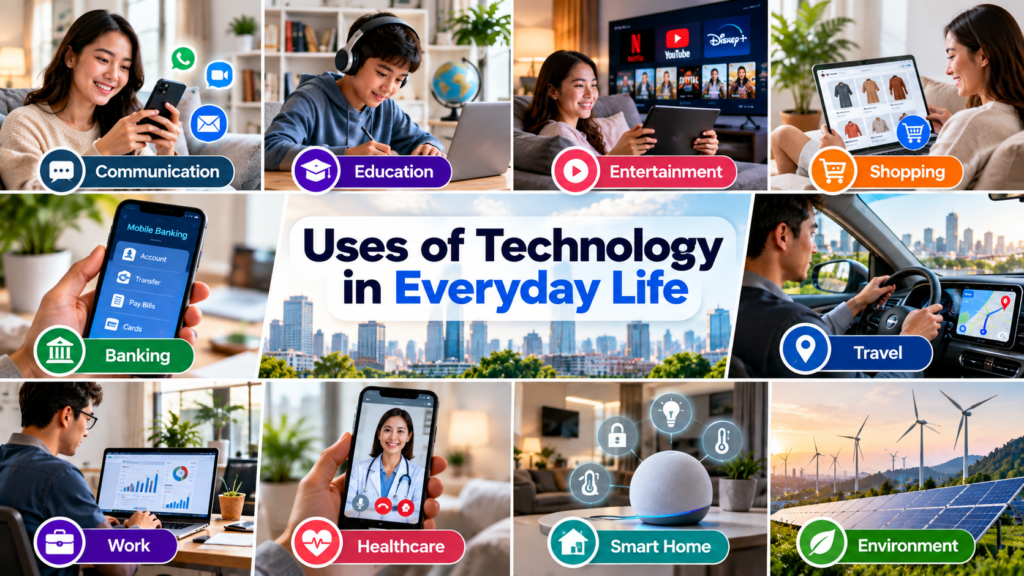
You probably use technology more often than you realize.
Here are some common examples.
Communication
You can communicate with family, friends, customers, and colleagues using phones, email, messaging applications, and video calls.
Education
Students can use computers, smartphones, online courses, digital libraries, and educational websites to learn new subjects.
Technology has also made remote learning possible.
Entertainment
Streaming services, video games, social media, podcasts, and digital books provide entertainment through connected devices.
Shopping
E-commerce allows consumers to search for products, compare prices, read reviews, and purchase products online.
Banking
Online and mobile banking allow users to check balances, transfer money, pay bills, and manage accounts without visiting a bank.
Work
Businesses use computers, project management software, video conferencing, cloud storage, and other tools to complete daily tasks.
Travel
GPS navigation, online booking systems, digital maps, and travel applications make planning and taking trips easier.
Benefits of Technology
Technology provides many benefits to individuals and businesses.
1. Saves Time
Technology can make many tasks faster.
For example, instead of manually calculating hundreds of numbers, you can use spreadsheet software to perform calculations in seconds.
2. Improves Communication
People can communicate quickly using smartphones, email, messaging applications, and video calls.
This is especially useful for businesses with employees and customers in different locations.
3. Increases Productivity
Technology can help people complete more work in less time.
Businesses can use software to organize information, automate repetitive tasks, and monitor operations.
4. Provides Easy Access to Information
The internet provides access to educational resources, research, news, tutorials, product information, and many other forms of information.
A person with an internet connection can learn about almost any subject.
5. Creates Business Opportunities
Technology has made it easier to start and operate online businesses.
Entrepreneurs can sell products, offer services, publish content, and reach customers through digital platforms.
This has created opportunities that were difficult or impossible to access in the past.
6. Makes Everyday Tasks More Convenient
Technology allows you to perform many tasks from home.
You can order food, shop for products, transfer money, book transportation, attend meetings, and communicate with others using digital devices.
Examples of Technology
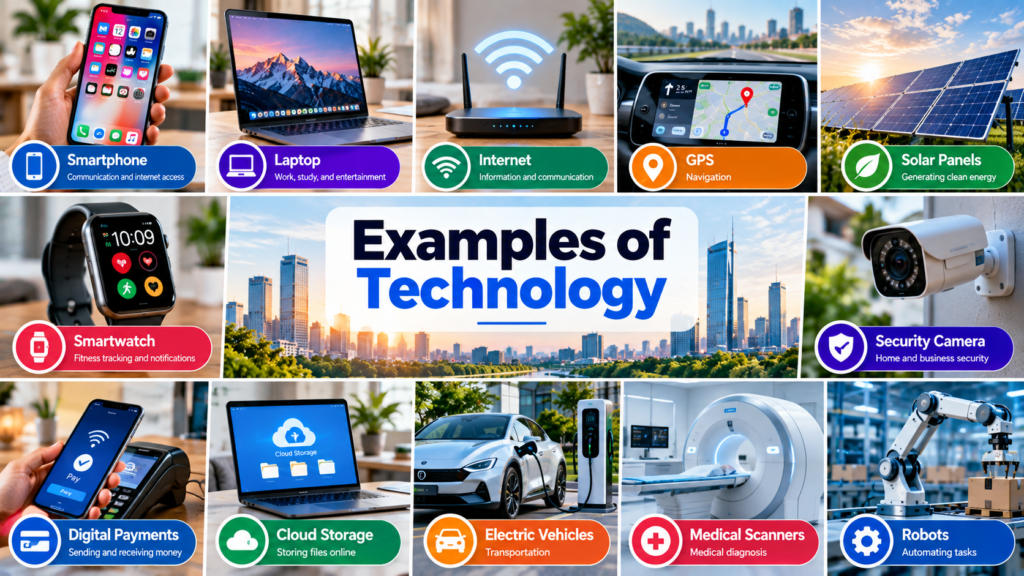
Technology is found in almost every part of modern life.
Here are some common examples:
| Technology | Common Use |
| Smartphone | Communication and internet access |
| Laptop | Work, education, and entertainment |
| Internet | Information and communication |
| GPS | Navigation |
| Solar panels | Generating electricity |
| Smartwatch | Fitness and notifications |
| Digital payments | Sending and receiving money |
| Cloud storage | Storing files online |
| Electric vehicles | Transportation |
| Medical scanners | Medical diagnosis |
These examples show that technology is much broader than computers and smartphones.
Technology in Business
Technology has changed the way businesses operate.
A small business can now use a website, social media, online advertising, payment systems, customer management software, and analytics tools to reach and serve customers.
For example, an online business might use:
- A website to display products
- E-commerce software to process orders
- Payment technology to accept money
- Email tools to communicate with customers
- Analytics tools to measure website activity
- Cloud storage to manage files
Technology can therefore help businesses reduce manual work, improve communication, and reach a larger audience.
Technology in Education
Technology has changed how people learn.
Instead of relying only on physical books and classrooms, students can access online courses, digital libraries, educational videos, interactive applications, and online communities.
Teachers can also use technology to create presentations, share learning materials, communicate with students, and manage assignments.
However, technology should support good teaching rather than completely replace the role of teachers.
Technology in the Workplace
Many workplaces now depend on technology.
Employees may use computers, communication platforms, project management systems, cloud services, and specialized software every day.
Remote work has also become easier because employees can communicate and collaborate online.
Technology allows companies to work with people in different cities and countries while reducing the need for everyone to be in the same physical location.
Disadvantages of Technology
Although technology provides many benefits, it also has disadvantages.
Privacy Concerns
Digital services can collect information about users. This makes privacy an important issue.
People should understand what information they share online and use strong security practices.
Cybersecurity Risks
Hackers and other criminals can target accounts, websites, networks, and devices.
Using strong passwords, multi-factor authentication, software updates, and security tools can reduce some risks.
Job Changes
Technology can change the type of work people perform.
Some repetitive tasks can be handled by machines or software, while new jobs can develop around emerging technologies.
This makes learning new skills increasingly important.
Too Much Screen Time
Spending too much time on phones, computers, and other screens can affect productivity and daily routines.
Technology is most useful when it supports your goals rather than constantly distracting you.
Frequently Asked Questions About Technology
What is technology in simple words?
Technology is the use of tools, machines, systems, and methods to solve problems and make tasks easier or more efficient.
What are the main types of technology?
Some major types include information technology, communication technology, computer technology, mobile technology, medical technology, financial technology, transportation technology, agricultural technology, and green technology.
What are some examples of technology?
Smartphones, computers, the internet, GPS systems, solar panels, digital payment systems, medical equipment, electric vehicles, and cloud services are all examples of technology.
Why is technology important?
Technology can save time, improve communication, increase productivity, provide access to information, and create new opportunities for individuals and businesses.
Is technology good or bad?
Technology itself is neither completely good nor bad. Its impact depends on how it is designed and used. Responsible use can provide significant benefits, while careless use can create risks involving privacy, security, distraction, and dependence.
What is modern technology?
Modern technology generally refers to newer tools, systems, and methods used today, including smartphones, cloud computing, connected devices, artificial intelligence, renewable energy systems, and advanced software.
Conclusion
Technology is a broad subject that affects almost every part of modern life.
From the smartphone in your hand to the computer used at work, technology helps people to communicate, learn, travel, manage money, run businesses, and solve everyday problems.
You do not need to understand every technical detail to benefit from it. Start by learning the technologies that are relevant to your goals, then gradually explore new tools and developments.
The most important thing is not simply having the latest technology. It is knowing how to use the right technology to solve the right problem.
Stay With Us
Technology is constantly changing, and we keep helping you to get better tools, smarter solutions, and new opportunities.
If you want to learn more, stay with Kasmova for practical technology guides, helpful tips, useful tools, and the latest technology insights.