
Marketing is the process of promoting, selling, and distributing a product or service to the people who need it. But marketing is much more than advertising, it covers everything a business does to understand its customers, build a brand, and turn interest into sales.
Whether you’re a small business owner, a student, or someone exploring a new career, understanding marketing is essential. In this guide, we’ll break down what marketing really means, why it matters, and how you can use it to grow.
What Does Marketing Actually Mean?
At its core, marketing is about connecting a product or service with the people who want it. It involves researching your audience, creating a message that resonates with them, and delivering that message through the right channels.
Marketing isn’t just about selling. It’s about:
- Understanding customer needs
- Building trust and brand awareness
- Creating value before asking for a sale
- Measuring results and improving over time
A good marketing strategy answers three simple questions: Who is your customer? What do they need? How will you reach them?
The Main Types of Marketing

Marketing comes in many forms. Here are the most common types every beginner should know:
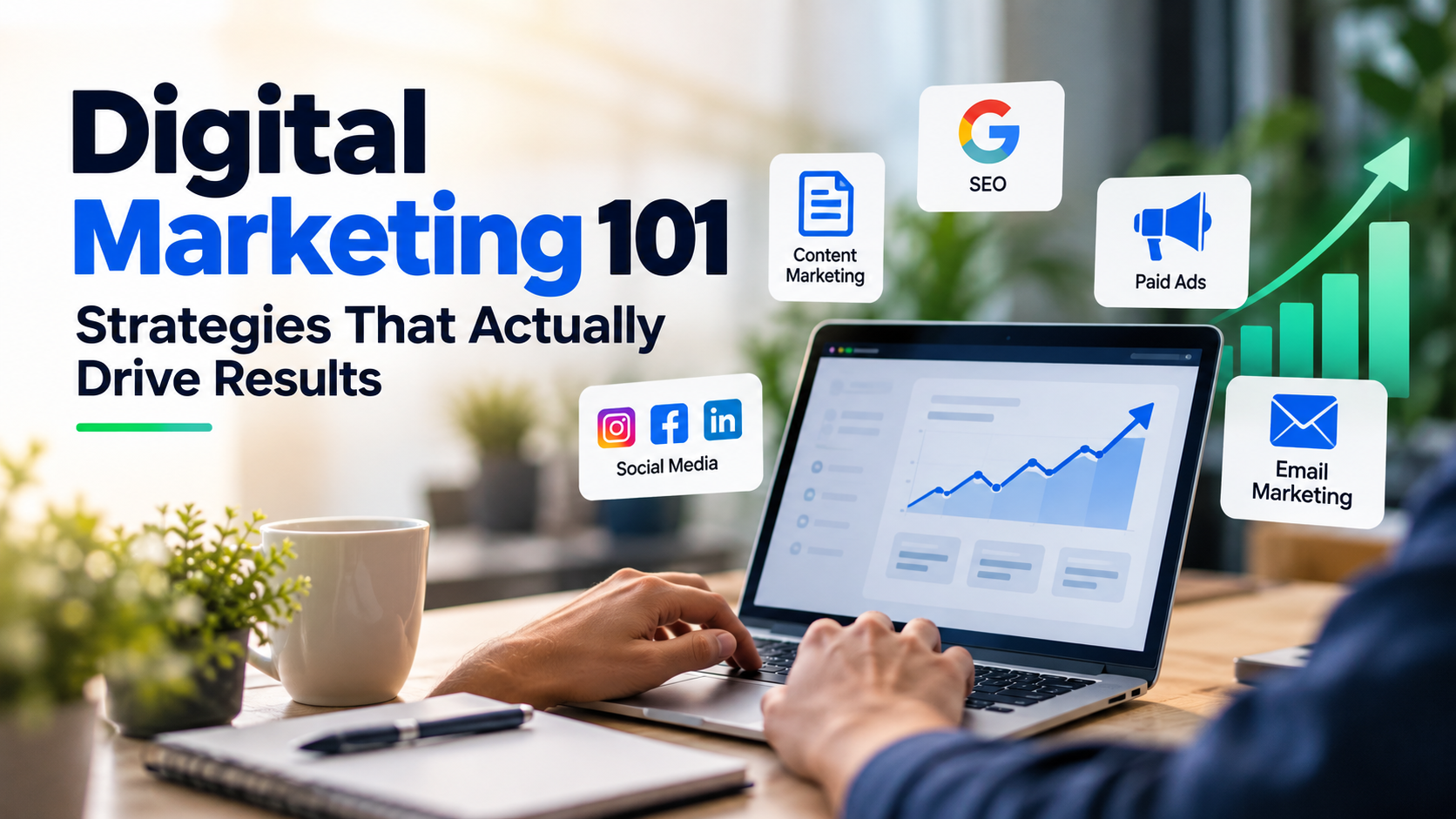
1. Digital Marketing
Digital marketing uses online channels — websites, search engines, email, and apps — to reach customers. It’s measurable, cost-effective, and essential for almost every modern business.
2. Content Marketing
Content marketing focuses on creating valuable material (blog posts, videos, guides) to attract and educate an audience. The goal is to build trust so customers choose you when they’re ready to buy.
3. Social Media Marketing
This involves using platforms like Instagram, TikTok, and LinkedIn to engage audiences, build community, and promote products directly where people spend their time.
4. Email Marketing
Email marketing remains one of the highest-return marketing channels. It allows businesses to nurture leads and maintain direct communication with customers.
5. Search Engine Optimization (SEO)
SEO is the practice of optimizing content so it ranks higher on search engines like Google. Strong SEO increases visibility without paying for ads.
6. Traditional Marketing
This includes TV, radio, print ads, and billboards. While digital marketing has grown, traditional marketing still plays a role, especially for local or offline audiences.
Why Marketing Matters for Every Business
Without marketing, even the best products can go unnoticed. Effective marketing helps businesses:
- Increase visibility — get discovered by the right audience
- Build trust — establish credibility through consistent messaging
- Drive sales — turn awareness into paying customers
- Retain customers — keep people coming back through ongoing engagement
- Stand out from competitors — differentiate through branding and value
In short, marketing is the bridge between a great idea and a successful business.
How to Build a Simple Marketing Strategy
You don’t need a huge budget to market effectively. Here’s a simple framework to get started:
- Define your audience — Know exactly who you’re trying to reach.
- Set clear goals — Are you building awareness, generating leads, or driving sales?
- Choose your channels — Focus on where your audience already spends time.
- Create valuable content — Solve problems, answer questions, and be helpful.
- Measure and adjust — Track what’s working and refine your approach.
Common Marketing Mistakes to Avoid
- Trying to reach everyone instead of a specific audience
- Focusing only on selling instead of building trust
- Ignoring data and not tracking performance
- Being inconsistent with branding or messaging
- Skipping SEO and organic growth strategies
Conclusion
Marketing is one of the most important functions of any business. It’s not just about promotion, it’s about understanding people, solving their problems, and delivering value consistently. Whether you’re just starting out or refining an existing strategy, the fundamentals of marketing remain the same: know your audience, communicate clearly, and provide real value.
Start small, stay consistent, and let good marketing do the heavy lifting for your business growth.