
I have spent the better part of this year running my content through nearly every AI writing tools worth mentioning from quick blog drafts to long-form guides to email sequences. Some of these tools earned a permanent spot in my stack.
Others I uninstalled within a week. This guide is the shortlist: what each tool actually does well, where it falls short, and which one is worth your money depending on what you’re trying to build.
If you only read one section, make it the comparison table. Everything after that is the “why” behind the ranking.
Disclosure: Some links in this post are affiliate links. If you sign up through them, I may earn a small commission at no extra cost to you. I only recommend tools I’ve actually used.
Quick Comparison: Best AI Writing Tools at a Glance
| Tool | Best For | Starting Price | Free Option |
| Claude | Long-form, natural-sounding prose | Free / $20/mo Pro | Yes (limited) |
| ChatGPT | Versatility, speed, brainstorming | Free / $20/mo Plus | Yes |
| Jasper | Brand voice + marketing teams | $59–69/seat/mo | 7-day trial only |
| Writesonic | SEO content on a budget | ~$19+/mo | Limited trial |
| Copy.ai | Short-form marketing copy | Free / paid tiers | Yes |
| Surfer SEO | On-page SEO optimization | Paid only | No |
| Notion AI | Teams already living in Notion | $19.50/user/mo (add-on) | No |
| Grammarly | Grammar, clarity, polish layer | Free / paid tiers | Yes |
Below, I’ll break down who each of these is actually right for — because “best” depends entirely on what you’re writing and who you’re writing it for.
1. Claude — Best for Prose That Doesn’t Sound Like AI
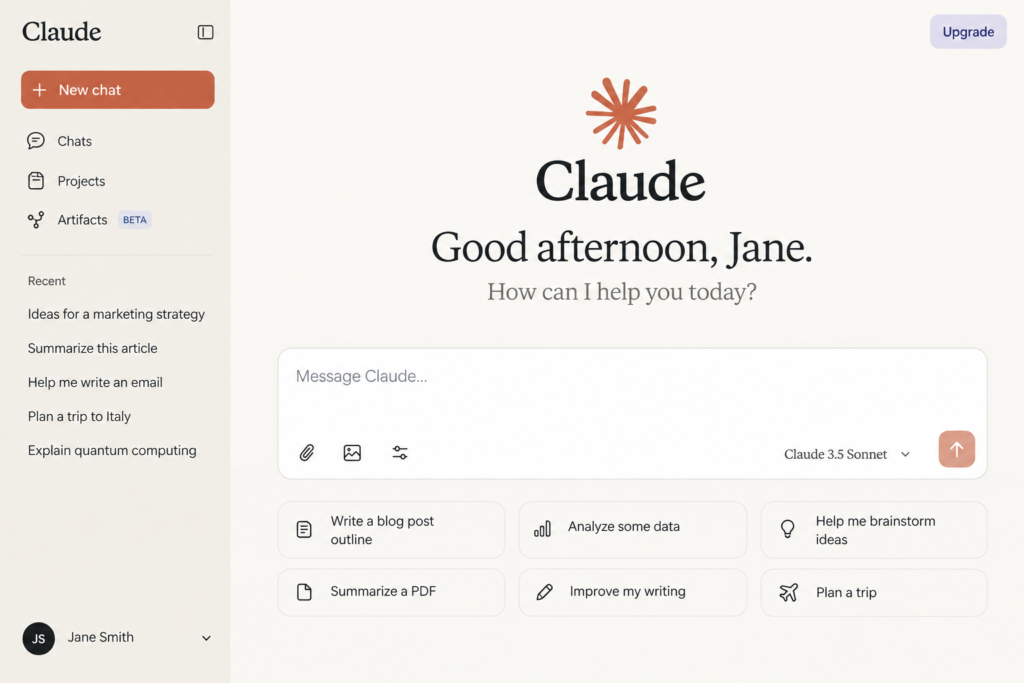
If your priority is content that reads like a person wrote it — not a robot cranking out keyword-stuffed paragraphs, Claude has become my default. It handles long documents with consistent voice and structure, which matters a lot once you’re past the 1,000-word mark and most tools start repeating themselves or losing the thread.
Pricing: Free tier available; Pro runs about $20/month, with higher-usage plans for power users and teams.
Strengths:
- Best-in-class prose quality, minimal editing needed to make it sound human
- Handles long, structured documents without losing coherence
- Strong at following nuanced style and tone instructions
Limitations:
- Smaller plugin/integration ecosystem than ChatGPT
- No built-in SEO scoring or keyword tools
- Better suited to writers who’ll do their own research/fact-checking layer
Best for: Bloggers, thought leaders, journalists, and long-form content creators who care more about quality than convenience features.
2. ChatGPT — Best All-Around, Best Free Tier
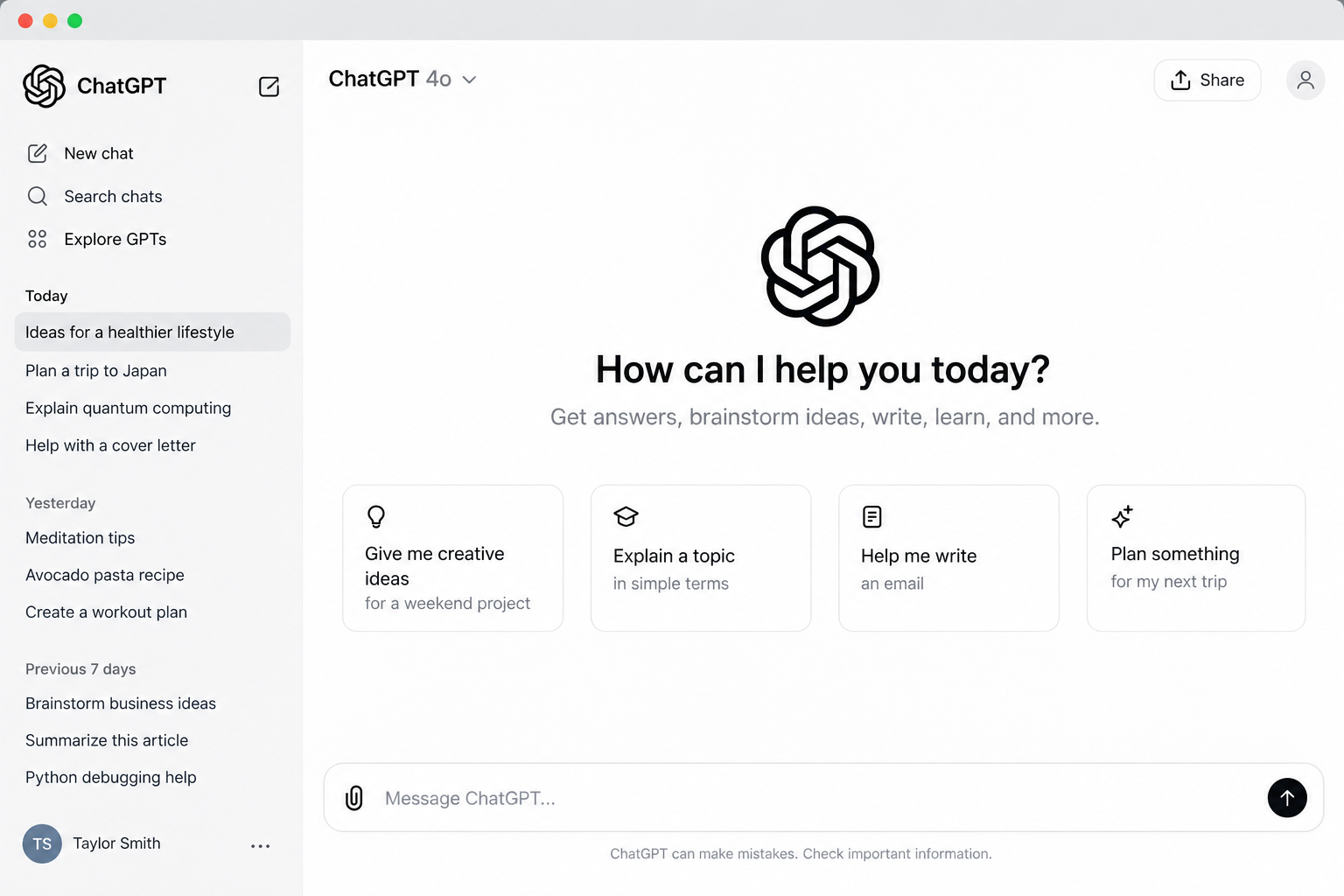
ChatGPT remains the most versatile tool on this list simply because it does a little bit of everything reasonably well, brainstorming, outlining, first drafts, quick edits, and its free tier is genuinely usable, not just a stripped-down demo.
Pricing: Free tier included; Plus is around $20/month.
Strengths:
- Fastest iteration for brainstorming and outlining
- Huge plugin and integration ecosystem
- Canvas mode is genuinely useful for collaborative editing
Limitations:
- Prose can feel more “AI-flavored” than Claude’s without heavy prompting
- No native SEO or brand-voice training out of the box
Best for: Anyone who writes regularly and wants one flexible tool rather than a stack of specialized ones.
3. Jasper — Best for Brand Voice at Scale
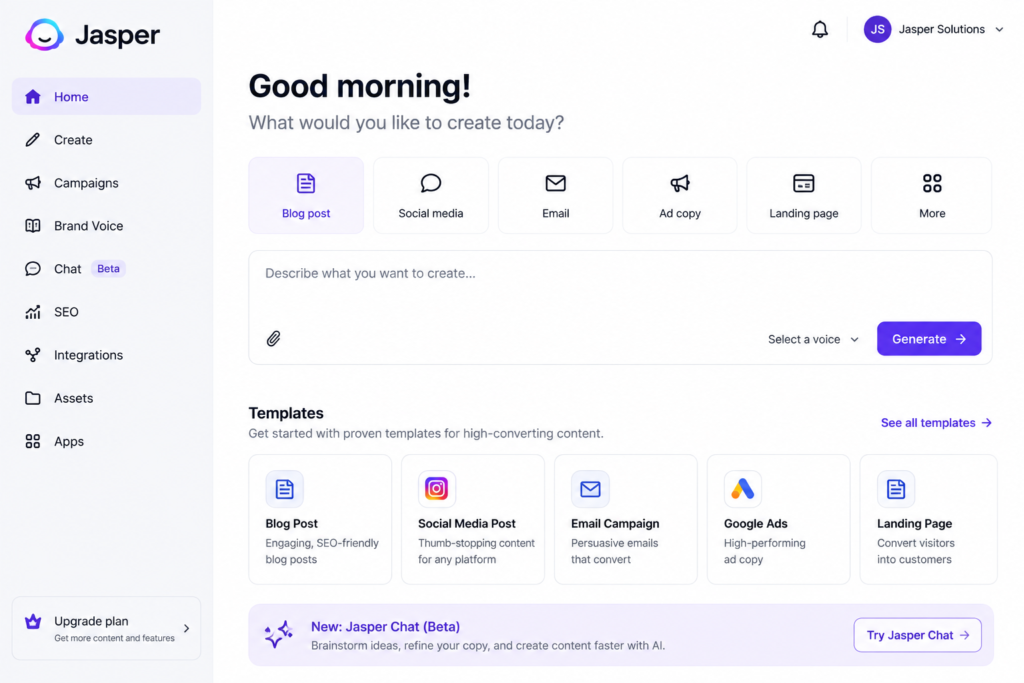
Jasper has evolved from a simple writing assistant into a full marketing content hub, with templates, team collaboration, and brand voice training baked in. It’s overkill for a solo blogger, but for a marketing team that needs five people writing in one consistent voice, it earns its price tag.
Pricing: Pro plan runs roughly $59–69 per seat/month (cheaper billed annually); Business tier is custom-priced for larger teams.
Strengths:
- Strong brand voice consistency across multiple writers
- Built-in workflow automation and team collaboration tools
- Deep template library for marketing-specific formats
Limitations:
- No permanent free plan — only a short trial
- Premium pricing makes it hard to justify for casual users
- Steeper learning curve than single-purpose tools
Best for: Marketing teams and agencies producing high volumes of on-brand content across multiple writers.
4. Writesonic — Best Budget SEO Option
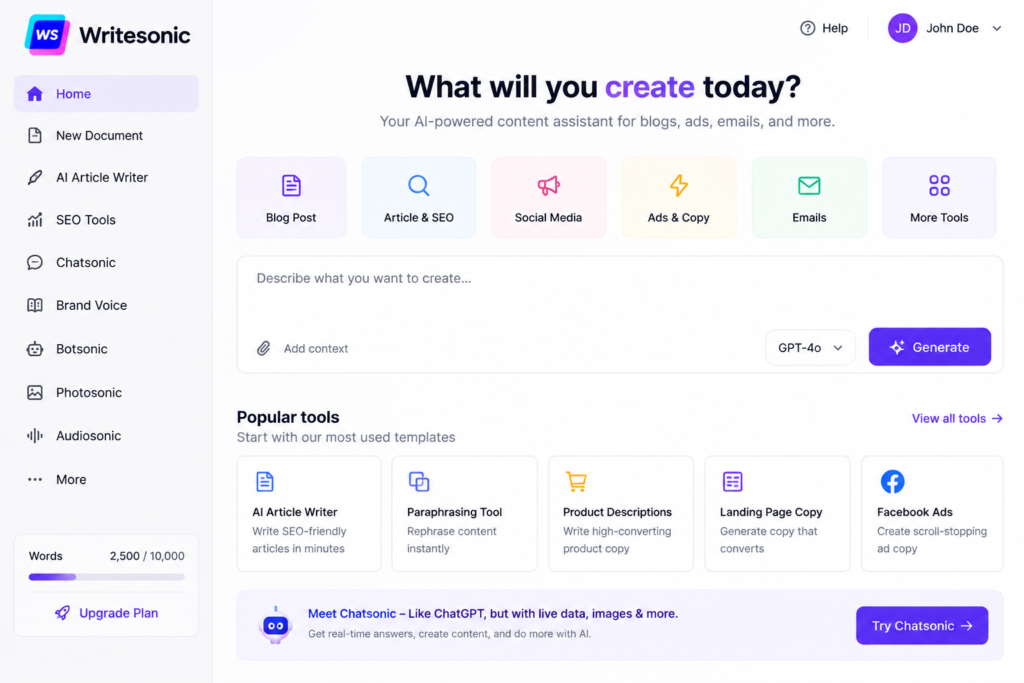
Writesonic covers a lot of the same ground as Jasper templates, brand tone, SEO-focused content at a noticeably lower price point. It’s not as polished, but for solo creators or small teams watching their budget, it’s a solid middle ground.
Strengths: Affordable, decent SEO tooling, wide template selection. Limitations: Output often needs more editing than pricier alternatives. Best for: Budget-conscious solo creators and small teams who want Jasper-like features without the premium price.
5. Copy.ai — Best for Short-Form Marketing Copy
Copy.ai shines at the short stuff ad copy, product descriptions, social captions, email subject lines rather than long-form articles. If your content needs are mostly punchy and short, it’s fast and has a workable free tier.
Best for: Marketers who need high volumes of short-form copy rather than full articles.
6. Surfer SEO — Best for On-Page Optimization
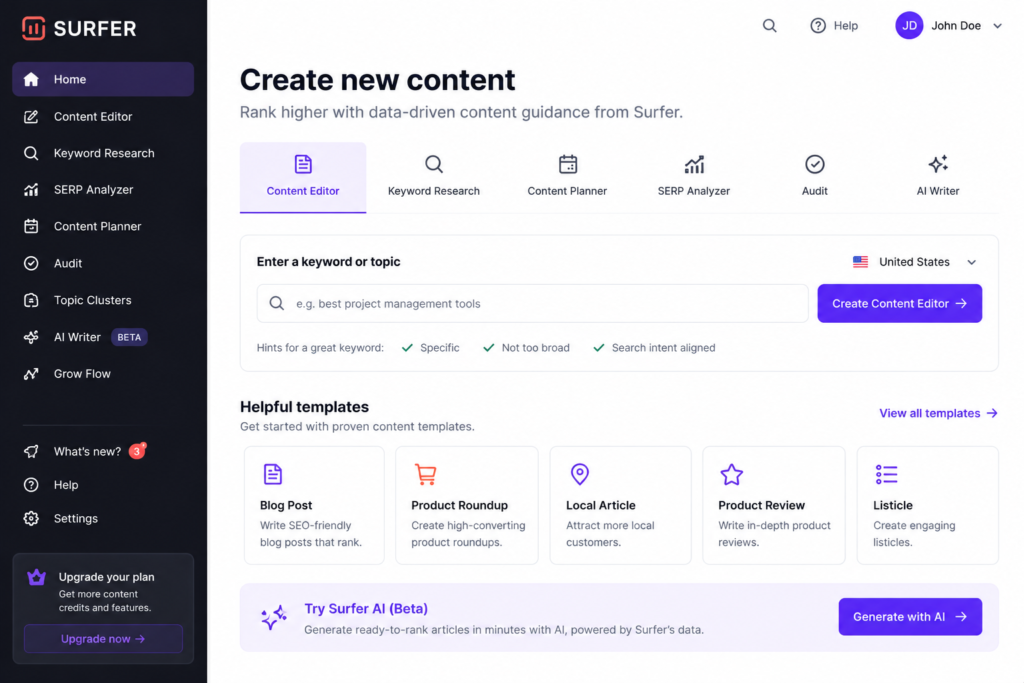
Surfer isn’t a drafting tool so much as an optimization layer, it scores your draft against pages already ranking for your target keyword and tells you what’s missing. Pair it with any drafting tool above for a real SEO workflow.
Best for: Teams that already have a writing tool and want direct, data-backed on-page recommendations.
7. Notion AI — Best for Teams Already in Notion
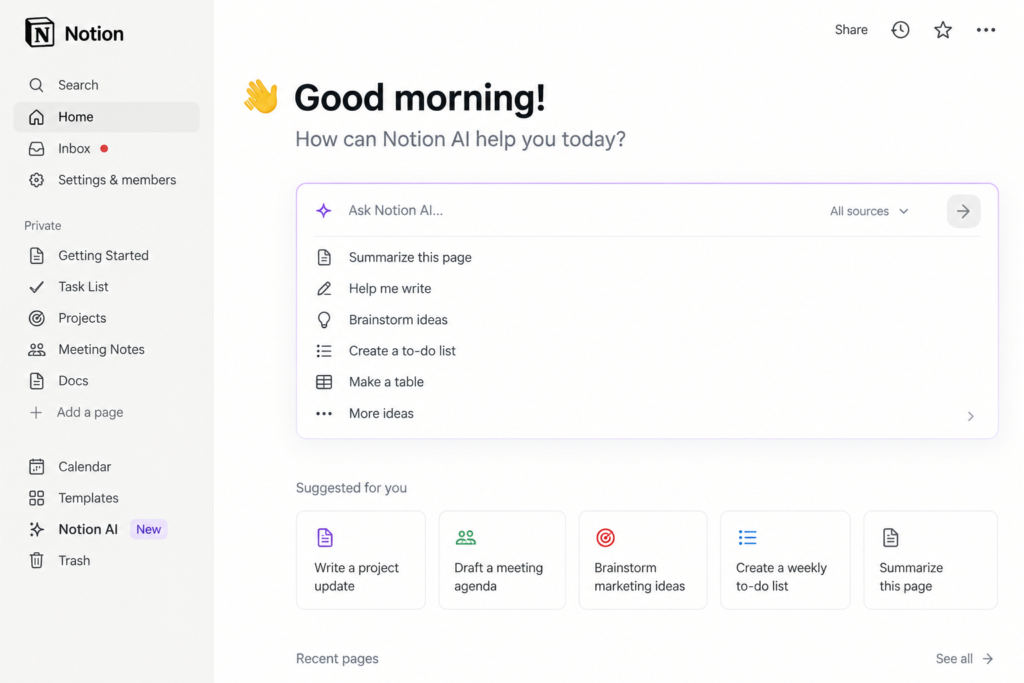
If your team’s docs and databases already live in Notion, the AI add-on means your writing assistant works directly inside your existing workspace instead of being yet another tab.
Pricing: Around $19.50/user/month as an add-on.
Best for: Notion-native teams who want AI woven into docs they’re already using.
8. Grammarly — Best Companion Tool (Not a Standalone)
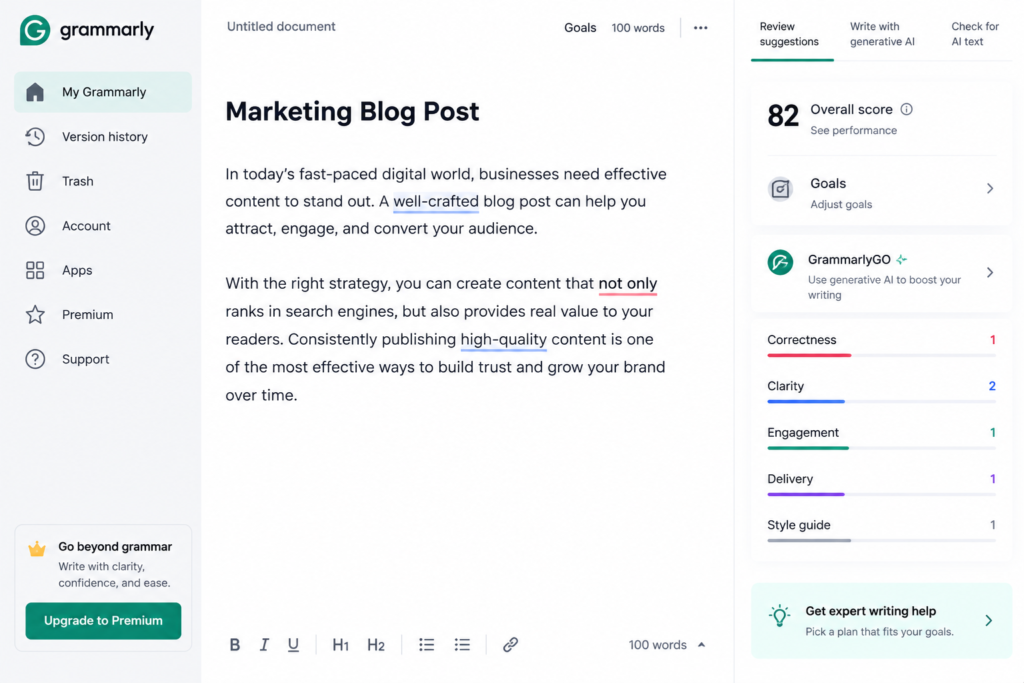
Grammarly isn’t a generative writing tool — it’s the polish layer that catches errors and tightens clarity after any of the tools above do the drafting. Nearly every writer benefits from running a draft through it before publishing.
Best for: Everyone, as a second-pass layer — not a replacement for a drafting tool.
How I Actually Choose
- Writing long-form content that needs to sound human? Start with Claude.
- Want one flexible tool that does everything decently? ChatGPT.
- Running a content team that needs a consistent brand voice? Jasper.
- Tight budget but still need SEO content? Writesonic.
- Mostly writing ads, captions, and short copy? Copy.ai.
- Already have a drafting tool and need SEO scoring? Add Surfer SEO on top.
Most serious content operations end up running two tools, not one — a drafting engine (Claude or ChatGPT) paired with either an SEO layer (Surfer) or a polish layer (Grammarly). Don’t feel like you have to pick a single “winner” and stop there.
Frequently Asked Questions
Do I need a paid plan to get started? Claude, ChatGPT, and Copy.ai all have usable free tiers. I’d recommend starting free and only upgrading once you hit a real limitation, not before.
Which tool is best for SEO blog content specifically? Writesonic or Jasper for drafting, paired with Surfer SEO for on-page optimization, is the most common combination among content teams I’ve talked to.
Can I use more than one tool at once? Yes, and most professional writers do — a drafting tool for the first draft, then Grammarly or a similar layer for polish before publishing.